Creator-Made Ads: Why Online Casinos Are Moving From Studio Shoots to UGC
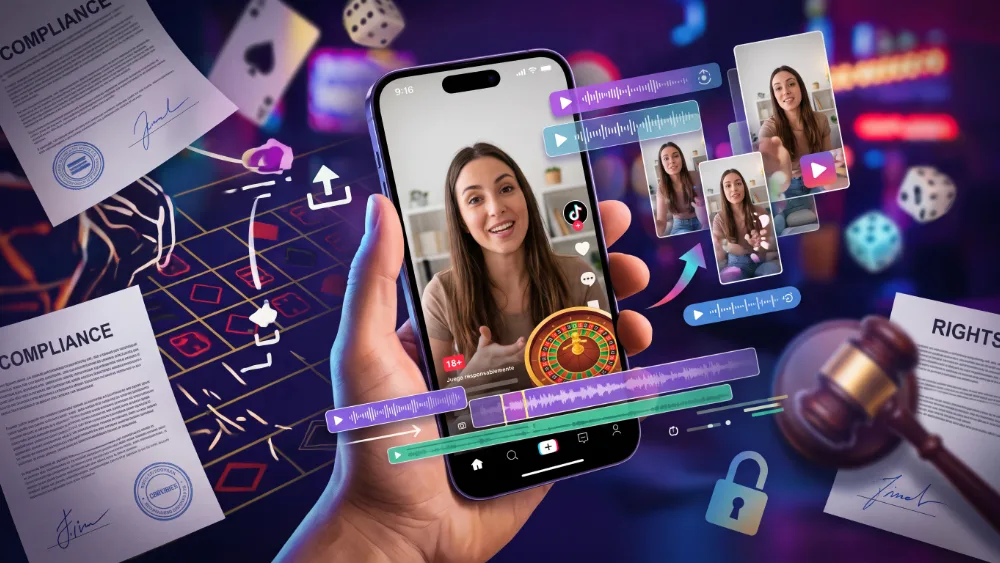
Scroll any short-video feed for ten minutes and you will notice something. The ads that hold your attention rarely look like ads.
They look like a person talking to their phone. A quick reaction. A screen recording with a voiceover. That style is called user-generated content, or UGC, and it has become one of the most tested ad formats in gaming and entertainment.
Online casinos are now adopting it too. This article explains why, how the format works, and what makes casino UGC harder to get right than UGC for a mobile game or a sneaker brand.
What casino UGC actually is
Casino UGC is short video content made by real creators in a native, unpolished style, then used as paid ads or organic posts by an online casino or sportsbook.
It is not the same as an influencer post. With an influencer, you pay for access to their audience. With UGC, you pay for the content itself and the right to run it on your own channels.
That difference matters. A UGC creator might have 2,000 followers and still produce an ad that outperforms a celebrity spot, because the ad is judged on its hook and clarity, not on the creator’s reach.
Why studio production struggles on short-form platforms
Traditional casino ads were built for TV and display. Glossy lighting, a voiceover, a big logo at the end.
On TikTok, Reels and Shorts, that look signals “skip”. Viewers have learned to recognise studio ads within the first second.
There is also a cost problem. A studio shoot produces a handful of finished ads. Short-form platforms reward volume and fast iteration, because creative fatigue sets in quickly. An ad that works in week one can be dead by week three.
UGC solves both issues. It looks native to the feed, and a single shoot day can produce dozens of variants.
The real advantage: testing at the hook level
The smartest teams do not treat UGC as “cheaper video”. They treat it as a testing system.
One creator records the same core message with five different opening lines. Another records it in a different setting. Editors then cut each version into vertical, square and horizontal formats.
When every file carries its own creative ID, the results tell you exactly which hook, which creator and which format drove sign-ups. That is far more useful than knowing “the video ad did okay”.
Over a few rounds, a casino builds a library of proven hooks and retires the weak ones fast.
Why casino UGC is harder than gaming UGC
A mobile game can say almost anything fun about itself. A licensed casino cannot.
Gambling advertising rules vary by market, but most share a few themes:
- Creators must be adults, and in many markets they must not appear to be under 25.
- Ads cannot suggest that gambling solves money problems or guarantees wins.
- Bonus terms must be stated accurately, often with key conditions on screen.
- Paid content must be clearly disclosed as an ad.
- Responsible gambling messaging is often required.
A creator who improvises a line like “this paid my rent” can turn a strong ad into a regulatory problem. So casino UGC needs approved claims written before anyone presses record.
Usage rights are the hidden trap
The second trap is rights. UGC is only valuable if you can legally run it as paid media, in the markets you need, for as long as you need.
Many brands discover too late that their agreement only covered organic posting, or expired after 30 days. Good practice is a written rights record for every file: where it can run, for how long, and whether it can be edited.
What a solid casino UGC process looks like
Teams that run this well tend to follow a similar sequence:
- Claims and markets first. Lock the approved messages and the countries the ads will run in.
- A concept matrix. Plan the hooks, angles and formats to test before casting.
- Casting and rights. Choose adult creators who fit the audience, and sign usage rights up front.
- Shoot and edit. Capture multiple hooks per creator and cut each into several formats.
- Review and handoff. Compliance review, then delivery with creative IDs attached.
Brands without in-house creator ops usually bring in a specialist. A dedicated casino UGC agency can handle casting, compliant scripting, hook variants and rights records in one workflow, which saves the marketing team from managing dozens of creators directly.
How to judge whether it is working
Views are the wrong scoreboard. A video can go viral with the wrong audience and bring zero depositing players.
Better metrics for casino UGC include:
- Cost per registration and cost per first deposit, by creative ID.
- Hook retention in the first three seconds.
- How quickly each winning ad fatigues, so you know your refresh rate.
- Compliance rejections per batch, which shows whether briefs are clear enough.
Where this is heading
Short-form video is not slowing down, and gaming audiences are some of the most feed-native users online. For casinos, that means the creative that wins will keep looking more like content and less like advertising.
The brands that do best will be the ones that pair that native style with strict claims control and clean rights. Fun on the surface, disciplined underneath.
Gambling should be for adults only. Always play responsibly and within the rules of your country.